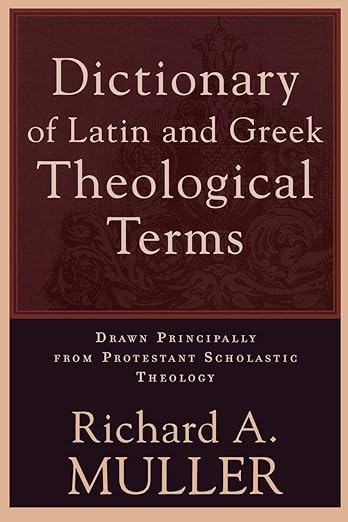
| donum superadditum: superadded gift; specifically, the gift of grace superadded to human nature after creation but before the fall, a concept debated in the medieval theory of grace and merit and rejected by the Protestant orthodox. The concept arises out of the problem of explaining the hypothetical ability of Adam and Eve to have retained their original righteousness. Augustine recognized (City of God, XIV.27) that a finite nature, such as that present in Adam, would be of necessity mutable and liable to fall. Indeed, if Adam were created fully righteous and also mutable (as indeed he was), then any change would constitute a fall. Augustine therefore argued a gift of resistible grace to Adam, before the fall, that made Adam able to choose the good and preserve his will in its pristine integrity. This grace can be described as an auxilium sine quo non (q.v.), an assistance without which no continuance of righteousness is possible. The medieval scholastics raised the question of the relation of this superadded grace to Adam’s original righteousness. Aquinas maintained that the donum superadditum was part of the original constitution of man and that its loss was the loss of the original capacity for righteousness. Since the superadded grace was not merited in the beginning, it cannot be regained by merit after the fall. Franciscan theology, particularly as mediated to the later Middle Ages by Scotus, argued that the donum superadditum was not part of the original constitution or original righteousness of man, but was to be considered truly as a gift merited by a first act of obedience on the part of Adam performed by Adam according to his purely natural capacities (ex puris naturalibus). Since Adam could, by doing a minimal or finite act, merit the initial gift of God’s grace, fallen man might, by doing a minimal act, also merit the gift of first grace (SEE meritum de congruo). The Reformers and the Protestant orthodox reject the idea of any remaining ability in man to do good and argue the necessity of an effective gratia praeveniens (q.v.), or prevenient grace. In place of the idea of a donum superadditum, they argue that the original righteousness of Adam and the posse non peccare (q.v.), or ability not to sin, was a donum concreatum (q.v.), a gift given in the original constitution of man. SEE homo; status purorum naturalium. | donum superadditum:外加的恩賜/額外附加的恩賜(superadded gift);具體來說,是在創造之後、墮落之前額外附加在人類本質上的恩典的恩賜。這一概念在中世紀的恩典與功績理論中引發了爭論,並被新教正統派所摒棄。這一概念源於解釋亞當和夏娃是否有能力保持原初的義(original righteousness)的假設問題。奧古斯丁認識到(《上帝之城》,XIV.27),像亞當這樣有限的本質必然是可變的(mutable),也是容易墮落的。事實上,如果亞當受造的時候是完全公義的,而且也是可變的(他確實如此),那麼任何變化都會構成墮落。因此,奧古斯丁認為,在亞當墮落之前,有一種可抗拒的恩典賜予亞當,使亞當能夠擇善而從,保持其意志的原始完整性。這種恩典可以被描述為auxilium sine quo non(若無此協助,見該條目),即若少了這種協助,仁義就不可能延續。中世紀經院學者們提出了這一額外附加的恩典(superadded grace)與亞當原初的義的關係問題。阿奎那認為,donum superadditum(外加的恩賜)是人類原始構成的一部分,失去它就失去了原初追求義的能力。由於額外附加的恩典一開始就不是靠功績賺得的,因此墮落後也無法透過功績重新獲得。方濟各會(Franciscan)的神學,尤其是由司各脫傳入中世紀後期的神學,認為donum superadditum(外加的恩賜)並不是人的原始構成或原初的義的一部分,而應被真正視為亞當憑著他純粹的自然能力(ex puris naturalibus)作出的第一個順服行為所賺得的恩賜(亞當憑這個功績賺來的恩賜)。既然亞當可以通過最小或有限的行為獲得上帝最初的恩典,那麼墮落的人也可以通過最小的行為獲得最初的恩典(見meritum de congruo;merit of congruity=情誼功績)。改教家和新教正統派拒絕接受人還保留任何行善的能力的觀點,他們認為必須要有gratia praeveniens,即先存的恩典(prevenient grace)。他們認為,亞當原初的義和posse non peccare(able not to sin=能夠不犯罪),即不犯罪的能力,是一種donum concreatum(同時受造的恩賜),是在人類最初構成裏蒙賜予的禮物,他們以此觀點來取代donum superadditum(外加的恩賜)的觀點。見 homo; status purorum naturalium。 |
 以馬忤斯之路:聖經神學譯介
One thought on “donum concreatum(同時受造的恩賜);donum superadditum(外加的恩賜)(Richard Muller)”