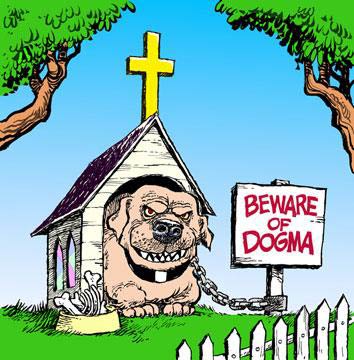
Why Dogma is a Frightening Word?
誠之譯自:http://thegospelcoalition.org/blogs/trevinwax/2013/03/23/why-dogma-is-a-frightening-word/
對現代人來說,「教義」是何等可怕的字眼,人們避之唯恐不及。
那些嚴肅看待我們信仰的人,就是那些真心相信基督教信仰的人,常常聽人說,我們應該放棄教義,因為教義會帶來分裂,我們要「包容」,要「寬容」,這樣才能和睦相處,彼此相愛。
但問題是,「包容」和「寬容」也是教義。
造成紛爭的並不是教義。教義理當使人團結一致。因為人與人之間共同的聯結應該是真理。這就是為什麼為真理爭辯是值得的。
許多人說要去掉教義,要寬容,好讓我們彼此相愛。但是如果沒有共同的教義,我們的愛要建立在什麼基礎上呢?所以,我們不應該去掉教義,而是要去掉謊言。如果教義所說的是真理,除了試圖去說服人相信外,你還能做什麼呢?柴斯特頓說,不喜歡已經定義好的教義,背後真正的意思其實是偏好未經過檢驗的教義。
那些持守寬容的教義的人,當然不知道他們也是有教義的,而且是很武斷的。事實上,他們的教義是很含糊的。但他們基本的信念是因為他們認為既然有例外,因此就沒有規則。不過,有例外存在,即使是容許例外的存在,也不能證明寬容的教義,反而是證明要有規則。當我們環顧四周,就可以明白「例外」證明了規則是存在的。
Dogma is a frightening word these days. People run from it.
Those of us who take our religion seriously, that is, who actually believe our beliefs, are usually told that we need to do away with dogma, which is divisive, and be “inclusive” and “tolerant” so that we can all get along.
But the problem is that “inclusiveness” and “tolerance” are dogmas.
It is not dogma that divides people. It is dogma that brings people together. The ultimate common bond is truth. That is why it is worth arguing about.
People talk nowadays of getting rid of dogmas and all agreeing like brethren. But upon what can they agree except upon a common dogma?
If you agree you must agree on some statement, if it is only that a cat has four legs. If the dogmas in front of you are false get rid of them; but do not say that you are getting rid of dogmas. Say you are getting rid of lies. If the dogmas are true, what can you do but try to get men to agree with them?
“The dislike of defined dogmas”, says Chesterton, “really means a preference for unexamined dogmas.”
The people who cling to the dogma of tolerance of course do not know that they are dogmatic. And as a matter of fact, their dogma is a bit mushy and vague. But their basic belief is that because there are exceptions, then there are no rules.
However, the presence of exceptions, even the allowance of exceptions, is not an argument for tolerance; it is an argument for the rule. And everywhere we look, we can see that the exception proves the rule.
 以馬忤斯之路:聖經神學譯介